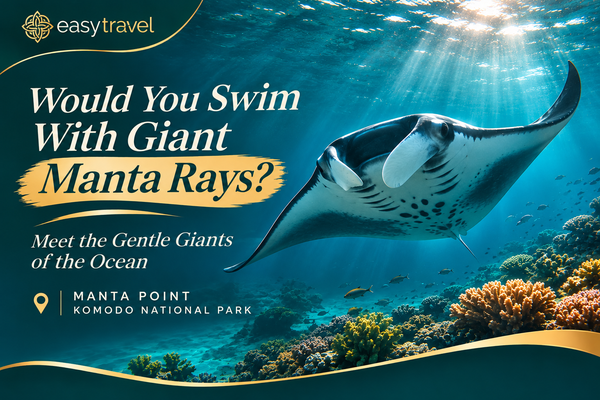
Would You Swim With Giant Manta Rays?
An extraordinary encounter beneath the waters of Komodo National Park.
This might be the most unforgettable experience you’ll ever have in Indonesia!
Imagine floating in the middle of the ocean when a magnificent manta ray suddenly appears beneath you. Its enormous wings glide effortlessly through the clear blue water, moving with a grace that almost seems unreal.
For a moment, everything becomes quiet. There is only you, the ocean, and one of nature’s most extraordinary marine creatures.
This is the magic of Manta Point in Komodo National Park, an incredible destination where travelers can experience marine wildlife in its natural habitat.
Welcome to Manta Point, Komodo National Park
Located within the spectacular waters of Komodo National Park, Manta Point is one of Indonesia’s most remarkable destinations for encountering manta rays.
The region’s nutrient-rich waters attract these magnificent animals, creating opportunities for snorkelers and divers to observe them in the wild.
Unlike an aquarium or a controlled wildlife attraction, every encounter here is completely natural. The manta rays are free to move, feed, and explore the ocean without human interference.
That is exactly what makes this experience so special.
How Big Are Manta Rays?
Manta rays are among the largest and most graceful fish in the ocean. Reef manta rays, which are commonly encountered in the Komodo region, can reach a wingspan of approximately five meters.
Despite their impressive size, manta rays are generally peaceful animals that feed primarily on plankton.
Unlike stingrays, manta rays do not have a venomous tail stinger. They are not naturally aggressive toward humans.
Watching such a large animal glide silently through the ocean is an experience that photographs and videos can never fully capture.
Why Do Manta Rays Come to Komodo?
Komodo National Park is located in a region where powerful ocean currents transport nutrients through the surrounding waters.
These conditions support abundant marine life, including the plankton that manta rays feed on.
Manta rays also visit certain reef areas known as cleaning stations, where smaller fish remove parasites and dead skin from their bodies.
Depending on the conditions, visitors may observe manta rays feeding, swimming, or visiting these cleaning stations.
What Is It Like to Snorkel at Manta Point?
Your adventure begins with a boat journey through the spectacular islands of Komodo National Park.
Upon arriving at Manta Point, your guide will assess the ocean conditions and explain the safety procedures before entering the water.
Once you are in the ocean, the experience becomes a waiting game. Sometimes a manta ray appears within moments. Other times, you may need patience and a little luck.
When one finally appears, its elegant movements and impressive size make the experience truly extraordinary.
Every encounter is different, and that unpredictability is part of the adventure.
How to Swim With Manta Rays Responsibly
Encountering manta rays in the wild is a privilege. Responsible tourism helps protect these remarkable animals and ensures that future generations can experience them too.
01. Never Touch a Manta Ray
Manta rays have a protective mucus layer on their skin. Touching them can damage this natural protection and cause unnecessary stress.
02. Maintain a Respectful Distance
Keep at least three meters away from manta rays whenever possible. If your guide or local regulations require a greater distance, always follow those instructions.
03. Never Chase or Block Their Path
Allow manta rays to move freely. Do not swim directly toward them, surround them, or attempt to follow them when they swim away.
04. Stay Calm in the Water
Avoid excessive splashing, sudden movements, and unnecessary noise. Calm behavior creates a better experience for both visitors and wildlife.
05. Never Feed Marine Wildlife
Manta rays must continue their natural feeding behavior without human interference.
06. Follow Your Guide’s Instructions
Ocean currents around Komodo can be strong and unpredictable. Always listen to your guide, use appropriate flotation equipment, and enter the water only when conditions are considered safe.
Observe. Respect. Protect.
The best wildlife encounters happen when animals are free to behave naturally.
Take photographs, enjoy the moment, and leave nothing behind but memories.
Is Manta Point Suitable for Beginners?
Snorkeling with manta rays does not require a scuba diving certification. However, Manta Point is an open-water snorkeling location where currents can sometimes be challenging.
Guests should inform their guide about their swimming ability and previous snorkeling experience.
Life jackets and flotation equipment can provide additional support, but they do not eliminate the risks associated with strong currents.
If conditions are unsuitable or you do not feel comfortable entering the water, you can remain on board and enjoy the surrounding scenery.
Your safety should always come first.
When Is the Best Time to See Manta Rays in Komodo?
Manta rays can be encountered in Komodo National Park throughout the year. However, their movements depend on ocean currents, food availability, tides, and other natural conditions.
| Period | What to Expect |
|---|---|
| April – June | A popular period for sailing, snorkeling, and exploring green island landscapes. |
| July – September | Dry-season travel with sunny weather, although winds and currents can vary. |
| October – December | Seasonal changes in ocean conditions and continued opportunities for manta encounters. |
| January – March | Manta encounters remain possible, but rainy-season weather may affect sailing schedules. |
There is no guaranteed season, date, or time for seeing manta rays. These are wild animals, and their presence is entirely dependent on nature.
How to Visit Manta Point from Labuan Bajo
Manta Point is accessible by boat from Labuan Bajo. Travelers can choose from several experiences depending on their schedule, budget, and preferred travel style.
One-Day Speedboat Tour
Perfect for travelers with limited time who want to combine snorkeling at Manta Point with other iconic destinations in Komodo National Park.
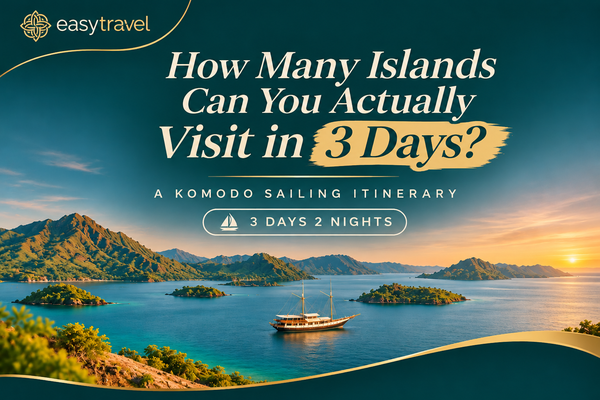
3 Days 2 Nights Komodo Sailing Trip
Spend three unforgettable days exploring the islands aboard a traditional Indonesian phinisi.
Enjoy comfortable cabin accommodation, meals on board, island excursions, snorkeling adventures, and beautiful sunsets surrounded by the Flores Sea.
Private Luxury Phinisi Charter
For travelers looking for a more exclusive experience, a private charter offers greater privacy and flexibility, subject to weather, safety conditions, and national park regulations.
More Than Just Swimming With Manta Rays
A journey to Manta Point is only one part of the extraordinary Komodo experience.
Depending on your selected sailing itinerary, you can also explore:
- Padar Island: Dramatic landscapes and breathtaking panoramic viewpoints.
- Pink Beach: Naturally pink sand surrounded by crystal-clear turquoise water.
- Komodo Island: Discover the legendary Komodo dragons in their natural habitat.
- Taka Makassar: A beautiful sandbank surrounded by the open ocean.
- Manjarite: Colorful coral reefs and tropical marine life.
- Kelor Island: Tropical beaches and spectacular coastal views.
- Kalong Island: An extraordinary sunset spectacle featuring flying foxes.
From hiking above the islands to exploring beneath the ocean, Komodo National Park offers an incredible variety of experiences within a single sailing journey.
What Should You Bring to Manta Point?
- Comfortable swimwear
- Long-sleeved rash guard for sun protection
- Snorkeling mask and fins, if you prefer your own equipment
- Waterproof camera or action camera
- Reef-friendly sunscreen
- Waterproof dry bag
- Reusable water bottle
- Beach towel
Snorkeling equipment is commonly included in Komodo sailing packages, but inclusions should be confirmed before booking.
Frequently Asked Questions
Are manta rays dangerous to humans?
Manta rays are generally peaceful, plankton-feeding animals. The main risks associated with snorkeling at Manta Point are ocean currents and open-water conditions rather than the manta rays themselves.
Do manta rays sting?
No. Unlike stingrays, manta rays do not have a venomous tail stinger.
Can I touch a manta ray?
No. Visitors should never touch, chase, feed, or disturb manta rays.
Am I guaranteed to see manta rays?
No. Manta rays are wild animals, and sightings cannot be guaranteed. Their presence depends on natural ocean conditions.
Do I need a diving certificate?
No. A diving certificate is not required for snorkeling. However, guests must follow safety instructions and be comfortable with the prevailing water conditions.
Is Manta Point included in a 3D2N Komodo sailing trip?
Manta Point is commonly included in three-day, two-night Komodo sailing itineraries. Visits are subject to the selected boat, itinerary, weather, currents, and safety assessments.
Some Experiences Stay With You Forever
Travel is not always about visiting famous landmarks or collecting photographs.
Sometimes, it is about a single moment that changes the way you see the world.
Floating above a magnificent manta ray, watching it glide effortlessly through the ocean, might be one of those moments.
It is a reminder of how beautiful, powerful, and fragile the natural world can be.
So, would you swim with giant manta rays?
DISCOVER INDONESIA DIFFERENTLY
Meet the Gentle Giants of the Ocean.
Discover the extraordinary underwater world of Komodo National Park with EASY INDO TRAVEL.
Choose from shared sailing trips, full-day speedboat adventures, and exclusive luxury phinisi charters.
Explore responsibly, travel comfortably, and create memories that will stay with you forever.
Disclaimer: Manta ray sightings are not guaranteed. All snorkeling activities, sailing schedules, and destinations are subject to weather, ocean currents, safety assessments, and national park regulations.